
Europe > 🇮🇹 Italy > Venice (VCE)

🚆 🚌⛴️ Do you need to rent a car in Venice ?
These scores are based on the quality of public transport and other travel options. If these are good enough to see the main points of interest, then you don’t strictly need to rent a car.





- For all transport modes, a score of 0 = very poor or none available; 10 = outstandingly good.
💰💶💳 Is it worth hiring a car in Venice?
These scores reflect the practical factors that affect whether renting a car is convenient, good value, and stress-free.


- For all factors, a score of 0 = very poor; 10 = outstandingly good
Venice Car Rental Costs
Price bands:
- From 1 ($0-10 per day) to 10 ($90-100 per day);
- For typical cheapest available economy hire car;
- Jan - Mar 2027 / Apr - Dec 2026.
- Prices correct as of Feb 2026 - estimates only, not a guarantee.
🌊 Introduction: Venice is the world’s ultimate “no-car city”
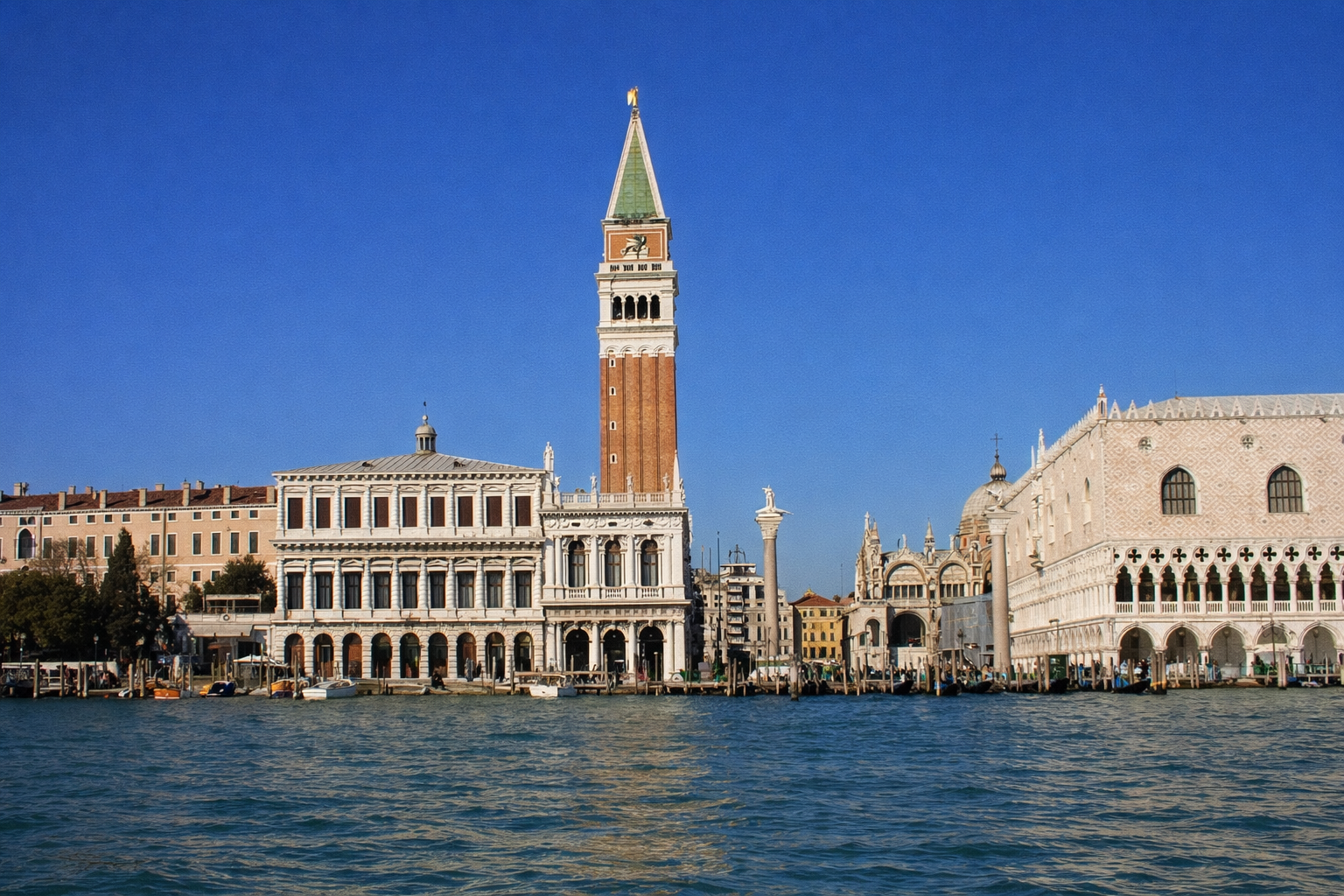
Venice is the purest pedestrian city on Earth. Cars simply stop at the edge: once you cross into the historic centre, there are no roads, no bicycles, and no scooters — just boats, bridges, and narrow alleyways. The lagoon itself forms a natural moat, creating a unique environment in which walking and boating aren’t alternatives to cars, but the only possible modes of travel.
Yet Venice sits in one of the richest regions of Italy for scenery, culture, lakes, mountains, and medieval towns, so the question “Should you rent a car near Venice?” becomes far more nuanced than the obvious “no” for the city itself.
🛬 Arriving in Venice: Airports and onward travel
✈️ Venice Marco Polo Airport (VCE) – the main gateway
Marco Polo Airport sits on the lagoon edge and is one of Europe’s best-connected tourist airports. The key point is this: you do not need a car to transfer to Venice, because you have three excellent alternatives:
🚤 1. Alilaguna waterbus
The most iconic way to arrive. Boats leave directly from the airport pier and sail into Venice’s lagoon, giving you your first glimpse of the skyline from the water. It’s slower than a taxi but considerably cheaper.
🚤 2. Water taxi
A private speedboat straight into the city. Expensive but unforgettable — the Bond-movie arrival.
🚌 3. Land-based buses to Piazzale Roma
ACTV and ATVO buses take around 20–25 minutes. From Piazzale Roma you walk or take a vaporetto.
There is no scenario where collecting a car at VCE on arrival makes sense unless you are leaving Venice immediately for a mainland road trip.
✈️ Treviso Airport (TSF) – the Ryanair alternative
Treviso is not in Venice; it is a small airport inland, mainly serving low-cost flights from across Europe. Transfer is by coach to Mestre or Piazzale Roma. Again, no need for a car unless Venice isn’t your first stop.
Treviso is an attractive medieval city in its own right, and rail links to Venice are frequent, so a rental car is still optional.
💶 Venice tourist tax: how it works in practice
Venice now operates a day-visitor access fee (contributo di accesso), introduced to manage crowding rather than to raise revenue. The standard fee is €5 per person per day, rising to €10 if you pay late or arrive without registering in advance. The charge only applies on selected high-pressure days, mainly weekends and peak periods, rather than year-round.
QR Codes
Payment is made online in advance, where you receive a QR code 📱 that can be checked at entry points. Importantly, this is not linked to any specific mode of arrival. Whether you enter via Santa Lucia station, Piazzale Roma, a vaporetto stop, or even from the lagoon itself, the same rules apply.
If you are staying overnight in Venice, you do not pay the access fee — even if you leave the city during the day and return later. Hotel guests already pay a separate accommodation tax via their hotel, and this covers the entire stay rather than being charged per day. There is no weekly discount for day visitors, because the fee is charged per day of entry.
Exemptions
A wide range of people are exempt. These include:
-
Venice residents and Veneto residents
-
Hotel and licensed accommodation guests
-
Students studying in Venice
-
People with disabilities and carers
-
Children under 14
-
Workers, property owners, and people visiting registered residents
If you believe the fee does not apply to you, you can self-declare your exemption online rather than paying. This is the correct and official way to avoid the charge if you qualify — not a loophole, but part of the system.
The key takeaway is that the access fee targets day-trippers only, not longer-stay visitors. If you are staying in Venice, visiting friends, or travelling through as part of a wider itinerary, the system is designed to be relatively unobtrusive — and it applies regardless of how you enter the city.
🏙️ Staying in Venice vs Mestre: two different worlds
🏰 Staying in Venice itself
If your trip is centred on the Doge’s Palace, Rialto, San Marco, and the lagoon islands, then Venice is the definition of a no-car base. Everything is walkable, and a vaporetto pass turns the entire lagoon into your personal transport network.
Advantages:
-
Venice is compact; even slow walkers manage fine.
-
You’re immersed in the islands, not commuting into them.
-
Sunsets from the waterfront are unbeatable.
Disadvantages:
-
Accommodation is pricier.
-
Luggage requires more planning — bridges, steps, and crowds.
-
Day trips to the mainland require a rail or bus transfer to Mestre.
🏨 Staying in Mestre (mainland Venice)
This is increasingly popular because:
-
Hotels are half the price of Venice.
-
Mestre Station is a major rail hub.
-
You can walk to the station and be on the islands in minutes.
Most importantly, this is where you’d base yourself if you want to use a rental car but still enjoy Venice without driving into it.
You simply park the car at your hotel or a long-stay facility, take the tram or train into Venice, and collect the car whenever you need a mainland excursion.
Mestre functions as the “gateway” for travellers who want Venice plus a wider Veneto adventure.
🚶♂️🚤 Getting around Venice: Walking and boats
🚶♀️ Walking
Venice is deeply walkable — tighter than Florence, more intricate than Bruges, and more atmospheric than anywhere else in Europe. Distances look large on the map but are usually 20–30 minutes in reality.
Navigation takes time at first, but getting lost in Venice is part of the charm.
🚤 Vaporetto network
The vaporetto is Venice’s answer to the metro. Key lines include:
-
Line 1 — the Grand Canal (slow, scenic, iconic)
-
Line 2 — faster express
-
Lagoon routes — to Murano, Burano, Torcello, Lido, and beyond
A day pass or multi-day ACTV ticket is recommended. This is essential for reaching the beaches of Lido, the glass workshops of Murano, and the colourful houses of Burano.
🛶 Island highlights
-
Murano — glassblowing factories reachable in 15 minutes
-
Burano — vibrant fishing village, great for photography
-
Torcello — peaceful, ancient, with a Byzantine cathedral
-
Lido di Venezia — Venice’s beach suburb, with roads and bicycles
-
San Giorgio Maggiore — the perfect skyline viewpoint
Lido is the only island with cars and buses, but even here, most visitors rent bicycles instead.
🅿️ Parking: Where cars actually stop
Because Venice’s historic centre is car-free, all road traffic terminates at:
🚘 1. Piazzale Roma
Closest point to the old city; expensive parking.
🛣️ 2. Tronchetto
A man-made parking island with cheaper options.
🚉 3. Mestre
If you’re staying in Mestre or doing day trips, parking here is easier, cheaper, and less stressful.
Parking at Tronchetto or Mestre makes sense only if Venice is one stop on a longer road trip, not if Venice is your only destination.
🛤️ Rail: Venice as a gateway city
🚆 Venezia Santa Lucia
This is one of the most dramatic railway arrivals in Europe: trains glide directly over the lagoon causeway and stop at the water’s edge. From here:
-
Verona — ~1 hr
-
Padua — 25 minutes
-
Vicenza — 45 minutes
-
Trieste — 1 hr 55 min
-
Bologna — 1 hr
-
Milan (HSL) — 2 hrs 10 min
-
Florence (HSL) — 2 hrs
-
Rome (HSL) — 3 hrs 45 min
You can explore the entire Veneto by rail, so Venice makes a superb base for car-free regional exploration.
🚆 Day trip favourites
▶️ Verona
Romeo and Juliet’s city; beautiful, compact, perfect without a car.
▶️ Padua
Scrovegni Chapel, Giotto frescoes, and one of Italy’s oldest universities.
▶️ Vicenza
Palladian villas — architecture lovers will adore it.
▶️ Trieste
Habsburg elegance on the Adriatic; direct trains are easy and scenic.
▶️ Bassano del Grappa
Alpine foothills, wooden bridge, grappa tastings — one of Veneto’s gems.
All are superb without a car, which strengthens the case for a no-car Venice trip. Because of this, many travellers opt to stay in Venice and explore mainland cities entirely by train. Every major station — Padova, Vicenza, Verona Porta Nuova — is well connected and generally walkable, and regional buses fill in the gaps.
In practical terms:
👉 If your entire itinerary is city-to-city, a rental car actively slows you down.
🛥️ Cruises: Another mode of arrival
Venice has scaled down its cruise operations, with larger ships now redirected to Marghera, but smaller ships still dock closer to the city. This matters because:
-
Cruise arrivals never need a car
-
Many excursions use rail or coach transfer
-
Venice’s lagoon system handles visitors extremely efficiently
Again, the theme repeats: Venice is fundamentally not a city for driving.
🚤 Venice’s Structure: Why Cars Stop at the Edge of the Lagoon
Venice is unique among global cities because its entire historic fabric is designed around water, footpaths, and bridges. The structure of streets is based on calli, salizade, and fondamente — none of which allow any form of motorised vehicle. Although this is widely known, it is still worth stressing that Venice is not merely car-free; it is car-impossible. The lagoon’s shallow waters, the absence of roads, and the sheer density of pedestrian routes make it unimaginable that cars could ever enter the historic core.
Because of this, all motor traffic terminates at Piazzale Roma or the multi-storey garages at Tronchetto. Even emergency services operate via specially designed boats. This unusual constraint turns Venice into one of the most walkable cities on Earth. It also sets up the question: what about the rest of your trip? Should you hire a car to explore beyond the lagoon?
📚🎬 Literary and film Venice in the Centro Storico
Venice’s strongest literary and cinematic associations sit firmly within the Centro Storico, and they underline why this is a city to be explored on foot and by boat rather than by any form of road transport.
One of the most famous examples is Shakespeare’s The Merchant of Venice 📖, whose settings are woven into the fabric of the historic city around the Rialto and the former Jewish Ghetto. The best-known modern adaptation, starring Al Pacino, brings these locations vividly to life, and all of them are easily reached on foot within the historic centre.
Casanova
Venice is also inseparable from Casanova 🎭, whose life and legend have inspired countless books, films, and television dramas. Palazzi, canals, and narrow calli provide the perfect backdrop, and many of the associated locations cluster around central districts that reward slow exploration. Again, this is a walking city first and foremost, with vaporetto journeys filling the gaps.
James Bond
James Bond has visited Venice three times 🎥, reinforcing its cinematic status. Scenes from From Russia with Love, Moonraker, and Casino Royale all use Venice’s waterways and architecture as dramatic set pieces. In Moonraker, Bond visits the Venini glassworks on Murano — a reminder that even when locations lie outside the main historic core, they remain easy to reach by boat 🚤 rather than by road.
Taken together, these literary and film connections reinforce a simple truth: Venice’s most famous stories are inseparable from its streets and canals, and they are best experienced slowly, on foot or by water, exactly as the city intends.
🎬 The Venetian take on The Italian Job
Venice also features in the 2003 remake of The Italian Job 🎬, although this later version is generally regarded as far less successful than the original 1969 classic starring Michael Caine, which was famously set in Turin. While the remake uses Venice as an atmospheric opening location, many critics argue that it relies more on spectacle than ingenuity, lacking the charm, humour, and iconic set pieces that made the original such a cultural landmark.
Locations
That said, the Venice scenes themselves are unmistakably Venetian. They lean heavily on the city’s canals, palazzi, and bridges, and once again reinforce the idea that this is a city designed for movement by foot and by water, not by road. Filming locations are concentrated in the historic centre and along the Grand Canal, making them easy to visit on foot 🚶♂️ or by vaporetto 🚤. In that sense, even a lesser film still plays to Venice’s strengths, using the city as a living set rather than a backdrop for car-based action.
Ultimately, while the remake may divide opinion, it unintentionally highlights what makes Venice unique: it forces filmmakers to abandon cars entirely and work with the city on its own terms — something the original Italian Job achieved so brilliantly in Turin, but which Venice accomplishes simply by existing.
🎭 Cultural & Literary Venice: Beyond Rialto & San Marco
📚 Death in Venice connections
The Lido, where Thomas Mann set his novel, is still atmospheric. A rental car is useless here; you move by:
-
vaporetto
-
foot
-
bicycle
Lido is also Venice’s beach retreat and home of the Venice Film Festival.
🚆 Venice Airport rail link: a brief overview
Venice Marco Polo Airport is set to gain a direct rail connection by 2027, finally linking the airport into Italy’s national railway network. The project will connect the existing Venice–Trieste main line to a new underground station at the airport, allowing both regional and long-distance trains to serve the terminal directly. This represents a major upgrade in intermodal travel for the Veneto region, bringing Venice closer to the rail-integrated airport model already seen in cities such as Milan and Rome.
However, this new rail link is not primarily aimed at replacing boats or buses into central Venice. Vaporetto services and airport express buses will remain the most direct options for reaching Santa Lucia station or the historic centre. Instead, the rail connection is designed to benefit travellers continuing beyond Venice, making it easier to reach destinations such as Verona, Trieste, Bologna, or Milan without a car, while also supporting locals and airport workers. In short, it strengthens Venice’s role as a regional transport hub, rather than changing the fundamentally car-free nature of the city itself 🚶♂️🚤.
🚗When you should consider renting a car in Venice
🏔 The Dolomites: Where a Car Transforms the Experience
Now here is where the Venice car or no car question becomes interesting. While the cities are wonderfully connected by rail, the Dolomites are not. Yes, you can get limited buses from Venice Mestre or from Belluno, but:
-
services are infrequent,
-
connections rarely line up smoothly,
-
journey times are long,
-
flexibility is almost non-existent in rural valleys.
The Dolomites, however, are a world-class natural wonder and a huge motivator for a broader Veneto itinerary. Areas like:
-
Val Gardena
-
Cortina d’Ampezzo
-
Alta Badia
-
Tre Cime di Lavaredo
-
Passo Giau / Falzarego / Pordoi
-
The Marmolada region
These are easiest — sometimes only — reached by car. Mountain passes are breath-taking, but they are also far from rail access. A car allows sunrise photography, spontaneous hikes, scenic loops, and the pure joy of mountain driving.
So, unlike Venice itself, the Dolomites strongly favour renting a car, even if it’s only for two or three days.
Suggested 3-Day Dolomites Drive from Venice
-
Day 1: Venice → Cortina d’Ampezzo via the Prosecco Road
-
Day 2: Tre Cime loop + Lake Misurina + Passo Giau
-
Day 3: Val Gardena + Alpe di Siusi + Bolzano → return car
This allows a world-class mountain itinerary that’s almost impossible by public transport.
A Dolomites Day Trip Loop Without a Car

One of the most surprising things about Venice is that it also works as a gateway to the Dolomites without a car 🏔️. A particularly elegant loop begins by taking the train north through the mountains to Calalzo–Pieve di Cadore–Cortina.
Walking and Cycling
From here, you have two excellent options. The first is to join what is often described as one of the best walking and cycling paths in Europe 🚴♂️🚶♀️: a beautifully surfaced route following the trackbed of a former railway, running north towards Toblach (Dobbiaco). The alternative is to continue by bus via Cortina d’Ampezzo, allowing time to explore the town before travelling on to Toblach. Either way, Cortina forms a natural pause point on the journey.
From Toblach, the scenery becomes even more dramatic. You can walk around the town itself or head (back) to the stunning Toblacher See (Lago di Dobbiaco), which is easily accessible on foot and offers classic Dolomite views.
Loop back via Verona
From here, the loop continues smoothly by train south through Brixen (Bressanone) and Bolzano, then onward to Verona.
With careful timing, it is perfectly possible to enjoy an evening visit to the Verona Arena, see it floodlit ✨, and even take a quick look at the Romeo and Juliet balcony, before completing the final leg back to Venice in just over an hour 🚄. The entire route also works just as well in reverse, making it one of the most rewarding car-free alpine loops in Europe.
🏞 Lakes Near Venice: Garda, Como, Iseo & Idro
Northern Italy’s lakes cluster closer to Milan than Venice, but several are still realistic additions.
Lake Garda (East side)
-
Direct trains to Peschiera and Desenzano
-
Ferries connect towns like Bardolino, Garda, Malcesine
-
Good for walkers, excellent for boat lovers
-
A car adds value mainly for the northern end: Riva del Garda, Limone, Tremosine
Lake Iseo
Less known, more atmospheric.
Train to Iseo or Pisogne, but the spectacular road along the west side may push you toward renting a car.
Lake Como (farther away)
Realistically, Venice → Lake Como is more of a cross-country trip, workable but long. Train to Milan and onwards is easiest.
A rental car only makes sense if combining Venice, the Dolomites, and the lakes in one loop.
Summary:
👉 Lakes are doable by rail.
👉 But a car creates freedom for wandering smaller villages.
🌊 Veneto’s Riviera: Beaches, Lagoons & Historical Towns
The coast near Venice is heavily developed, and several towns rely almost entirely on holiday parks.
Easy by public transport
-
Jesolo Lido
-
Caorle
-
Bibione
-
Chioggia / Sottomarina
These are linked by direct buses or ferries. No need for a car unless staying in remote campsites.
Worth a car
-
Po Delta Regional Park
-
Rural agriturismi around Polesine
-
Secluded beaches beyond Chioggia
The Po Delta is one of Italy’s most underrated landscapes — ideal for birdwatching — but awkward without a car.
🖼 Islands of the Lagoon
A car plays no role, but boat travel is an essential part of the broader experience.
-
Murano → glassmaking tradition
-
Burano → colourful lace island
-
Torcello → the ancient cradle of Venetian civilisation
-
San Michele → Venice’s cemetery island
-
Giudecca → relaxed neighbourhood with stunning skyline views
Including these enhances the Venice section without involving cars at all.
🍇 Prosecco Hills: A Perfect 1–2 Day Drive
This UNESCO-listed wine region lies between Conegliano and Valdobbiadene. While you can technically reach some towns by rail, the scenic Strada del Prosecco is designed for leisurely driving.
The Prosecco Superiore zone is hilly, dotted with vineyards, and ideal for:
-
small wineries → tastings
-
dramatic viewpoints → photography
-
agriturismi → rural lunches
-
slow roads → romantic drives
Unlike Tuscany’s wine routes, the Prosecco Hills are compact and approachable from Venice in a single day.
👉 A top reason to rent a car for one day.
🕌 The Venetian Villas Along the Brenta Canal
These ornate villas once belonged to Venice’s nobility. The route from Stra to Mira to Malcontenta is stunning.
Ways to reach them:
-
Boat tours (Brenta Riviera cruises)
-
Local buses (practical but not exciting)
-
Car (best for visiting multiple villas in one day)
Palladio’s Villa Foscari (“La Malcontenta”) is the most famous — magical but remote.
⭐ Conclusion — should you rent a car in Venice?
You should never rent a car for Venice itself. The old city is entirely pedestrian, boats form the transport backbone, and distances are short enough to cover everything on foot. Even wider lagoon trips — the Lido, Murano, Burano, Torcello — are easily reached by vaporetto. Venice is arguably the world’s most satisfying no-car destination.
However, if your trip also includes mainland Veneto, the Prosecco Hills, Lake Garda, tiny medieval towns, or the Dolomites, then a rental car becomes a powerful extension of your itinerary — just not for the Venice portion.
The best strategy is to explore Venice car-free first, then pick up a rental car from Mestre or the airport for onward travel. This keeps the magic of Venice intact while giving you flexibility for broader adventures.
Italy
Search for Car Rental in Venice with Economy Bookings .com
🚗 ✅ ❌ Summary Table
This summary score brings together how much you really need a car, whether it’s worth it, and an overall recommendation.





Frequently Asked Questions

|
Visited? – Have we visited Venice in person (year)?
N/A
|
|
Updates – When was this page last updated:
|

|
What are the general advantages and disadvantages of renting a car in any location?
|

|
I'm still not sure whether or not to rent a car in Venice –
can you offer more advice?
|

|
Can you advise us on how to get the best car rental deal in Venice?
|
👍🏾 / 👎🏻 Will You Rent a Car in Venice?
 Would you rent a car in Venice, or would you rely on tours or public transport instead?
Everyone travels differently, and the right choice often depends on where you’re going, how long you’re staying, and what kind of trip you’re planning.
Would you rent a car in Venice, or would you rely on tours or public transport instead?
Everyone travels differently, and the right choice often depends on where you’re going, how long you’re staying, and what kind of trip you’re planning.
Hopefully this page has given you a quick, practical overview of the pros and cons of renting a car in Venice, and whether it’s really necessary or not. Maybe it’s helped you make up your mind — or maybe you’ve already visited and have insights to share.
We always welcome comments, questions, and comparisons with other cities.
All feedback is read, and any questions or clarifications are usually replied to within 24 hours.