
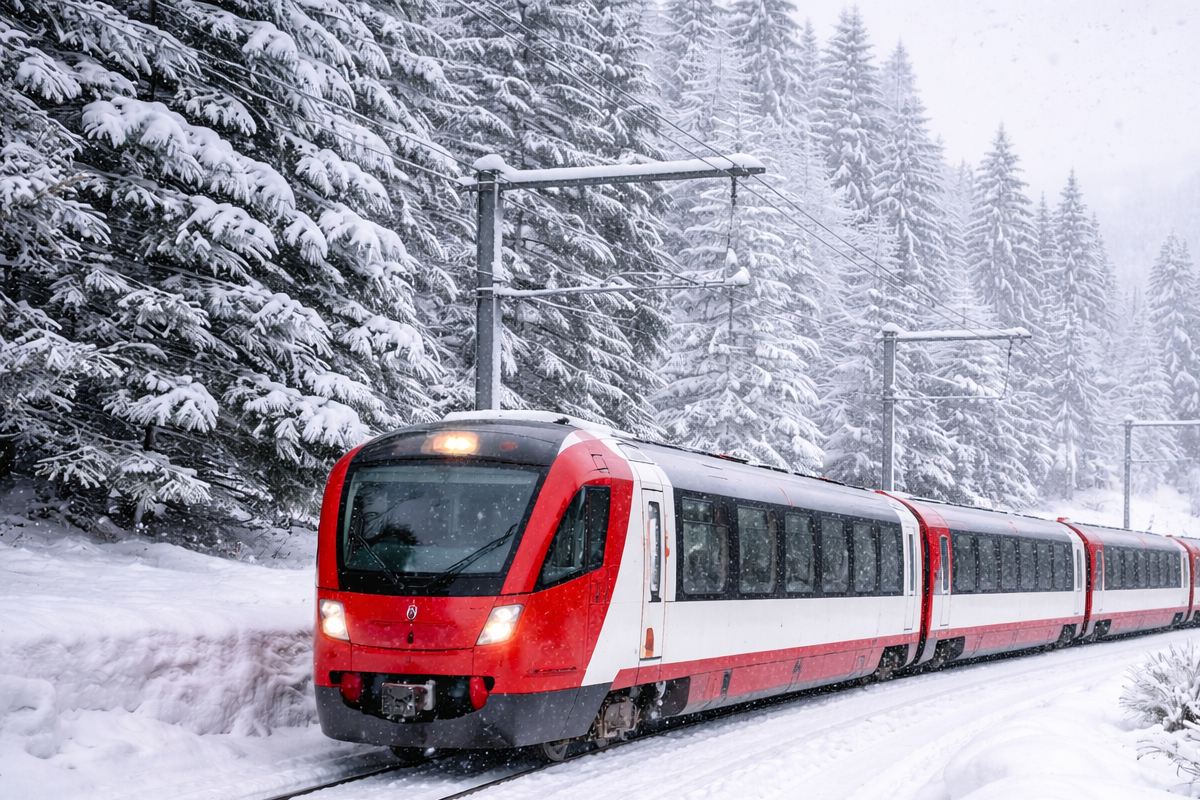
When snow brings transport systems elsewhere to a halt, Swiss mountain railways keep running — calmly, predictably, and almost boringly on time. This isn’t luck, and it isn’t just “Swiss efficiency” as a cliché. It’s the result of hard geography forcing honest engineering, backed by culture, governance, and long-term thinking.
Here’s why Alpine railways in Switzerland often outperform flatter, supposedly easier networks.
Mountains Remove All Illusions 🏔️
Steep gradients, tight curves, tunnels, avalanches, and deep snow leave no margin for wishful thinking. You cannot design “good enough” infrastructure and hope for the best. Every weakness will be exposed, quickly and publicly.
As a result, Swiss mountain lines are:
-
Over-engineered by necessity
-
Built to withstand extremes as standard
-
Designed for winter as the baseline, not the exception
Flat networks can afford shortcuts. Mountain railways cannot.
Snow Is Assumed, Not Feared ❄️
Swiss Alpine railways plan on:
-
Heavy snowfall
-
Ice
-
Rockfall
-
Avalanches
And they design accordingly:
-
Snow sheds and avalanche galleries
-
Protective fencing and deflection structures
-
Heated points (switches) everywhere
-
Constant monitoring of weather and terrain
In flatter countries, snow is often labelled “exceptional weather.”
In the Alps, snow is simply part of the timetable logic.
Slower Speeds, Higher Reliability ⏱️
Mountain railways accept physics instead of fighting it.
Rather than chasing headline speeds, they prioritise:
-
Conservative braking distances
-
Predictable acceleration
-
Stable adhesion in poor conditions
Lower speeds mean:
-
Fewer sudden failures
-
More recovery time when something goes wrong
-
Delays that don’t cascade across the network
Flat networks often push capacity and speed to the edge — making them fragile.
Mountain lines trade speed for certainty.
Fewer Routes Mean Higher Priority 🧭
Many Alpine routes are:
-
Single corridors through valleys or passes
-
Vital for tourism, freight, and local communities
-
Strategically important at a national level
If a mountain line closes, there is often no alternative road or rail route. That reality concentrates funding, political attention, and operational seriousness.
Redundancy is replaced by robustness.
Unified Control, Fast Decisions 🧠
Most mountain routes are operated or tightly coordinated by Swiss Federal Railways.
This matters because:
-
Infrastructure, operations, and maintenance speak the same language
-
Decisions are made centrally, quickly, and confidently
-
There’s no fragmentation between operators, contractors, and regions
When snow hits, there’s no debate over responsibility — just action.
Maintenance Is Constant and Visible 🔧
Mountain railways don’t rely on distant response teams.
Instead:
-
Crews are stationed locally
-
Inspections are frequent and hands-on
-
Preventative maintenance is culturally valued
In flatter networks, maintenance is often optimised for cost.
In the Alps, it’s optimised for never being the weak point.
Culture Completes the System 🇨🇭
This is the quiet advantage technology can’t replace.
-
Engineers, drivers, and dispatchers grow up with winter
-
Procedures are rehearsed every year
-
Expectations are realistic but precise
Snow doesn’t trigger panic, political blame, or media hysteria.
It triggers checklists.
The Alpine Paradox ⚖️
Harder geography produces better railways.
Mountains force discipline:
-
You can’t postpone investment
-
You can’t pretend weather is rare
-
You can’t rely on luck
So Swiss mountain railways become:
✔ more resilient
✔ more punctual
✔ more trusted
Often outperforming flatter, busier, and wealthier networks.
Why the UK struggles, even in Scotland
By contrast, mainline British railways were never designed around persistent snow. The UK’s climate sits awkwardly in a marginal zone: cold enough for ice and snow to cause real problems, but not cold enough often enough to justify Swiss-level infrastructure everywhere. British points are more exposed, overhead wires are tensioned for milder temperature ranges, and timetables prioritise peak-hour density over resilience. When snow does arrive, it tends to be wet, heavy, and freeze–thaw prone — the worst possible combination for railways — clogging points, causing ice accretion on conductor rails and overhead lines, and disrupting traction current far more than dry alpine powder snow.
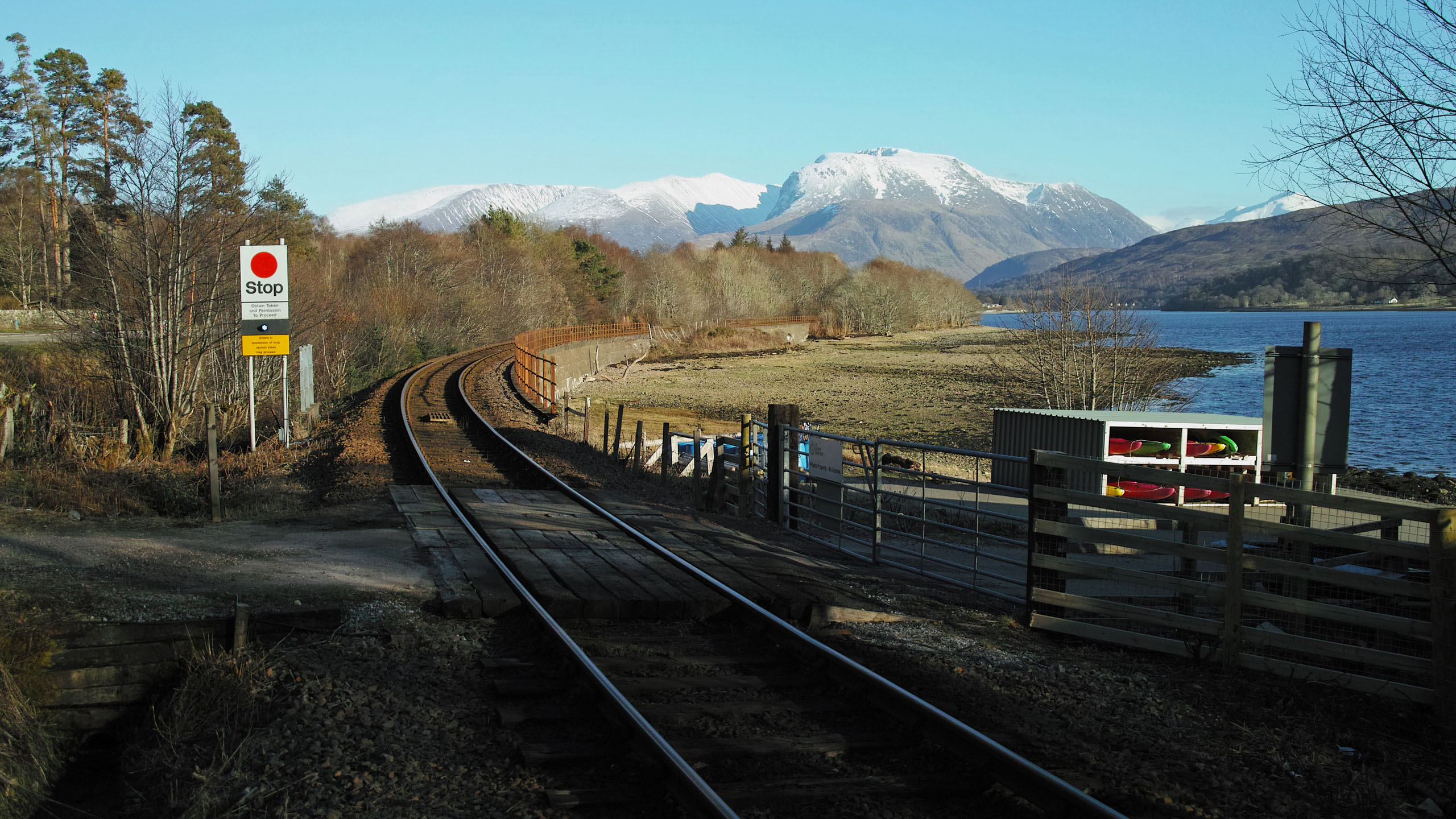
There’s also a systems problem. Swiss railways operate as an integrated national network with a single dominant culture of punctuality and robustness; British railways are fragmented between infrastructure managers, train operators, rolling-stock owners, and contractors, which slows decision-making during disruption. Swiss mountain lines accept slower speeds in winter as the price of reliability; British mainlines are optimised for maximum throughput, so a small failure quickly cascades. In short, Switzerland wins not because mountains are easier — they’re harder — but because the railway is honest about that difficulty and builds for it from day one 🚆❄️🏔️
Final Thought 🚆✨
Swiss mountain railways don’t stay punctual despite snow.
They stay punctual because snow was never ignored in the first place.